ProudMe
A row of check marks can make a routine visible. It can also become a source of pressure if the chart starts measuring a child’s worth, body, appetite, sleep outcome, or “perfect streak.” The difference is how the family defines success.
Let the child help choose one small action. Track attempts, keep the cue visible, treat missed days as information, and review together. In an app, look for privacy, parent controls, age-appropriate design, and honest limitations.
Choose an action a child can actually do
Track a behavior, not a vague result. “Start the bedtime routine at 8:00” is trackable. “Sleep well” is not fully under a child’s control. “Put one fruit option in the lunchbox” is clearer than “eat perfectly.”
- Let the child choose the area. Offer a small menu across movement, eating, sleep, or screen balance.
- Shrink the action. Make the first version easy enough to try on a busy day.
- Name the cue. Decide when or where the action starts.
- Define what counts. A check mark should mean “I attempted the chosen action,” not “I had a perfect day.”
“Which would make mornings easier: packing your bag after dinner, choosing clothes before bed, or putting your device on the kitchen charger?”
Build a pressure-free tracker
Use a paper chart, whiteboard, calendar, or app—whichever the child can understand and the family will actually revisit. Keep the tracker visible but not publicly embarrassing. Review patterns once or twice a week rather than commenting on every empty box.
- Track one or two actions at first.
- Use simple language and icons the child understands.
- Keep health data private within the family.
- Praise honest check-ins, including “I forgot.”
- Ask what helped instead of only counting totals.
A missed day is data, not a broken streak
General behavior-change guidance from the National Institute of Diabetes and Digestive and Kidney Diseases emphasizes planning, tracking progress, and learning from setbacks. For a child, translate that into curiosity: Was the cue missing? Was the action too large? Did the schedule change?
“The chart is showing us that Tuesdays are hard. What changes on Tuesday, and should we shrink the habit or use a different reminder?”
Avoid “starting over” as punishment. The next opportunity is simply the next attempt.
Use rewards without making health transactional
Recognition can help a new routine feel visible. Prefer specific praise, choosing a family activity, extra reading time, a sticker, or another nonfood celebration. Do not reward weight change, food restriction, sleep itself, or exercise used to “earn” food. Gradually let the routine and its practical benefit become the reason to continue.
What to look for in a habit tracker app for kids
- Clear purpose: the app explains what it tracks and what it does not promise.
- Child privacy: readable policies, parental consent where required, limited collection, deletion options, and no behavioral advertising.
- Age-appropriate feedback: no shame, public rankings, body comparison, or manipulative streak loss.
- Child choice and caregiver involvement: goals can be adjusted rather than imposed by software.
- Honest evidence language: tracking is a behavior-change technique, but an app should not claim it guarantees health outcomes. A review of goal-setting and goal-tracking apps found frequent use of established behavior-change techniques but limited evidence about app efficacy.
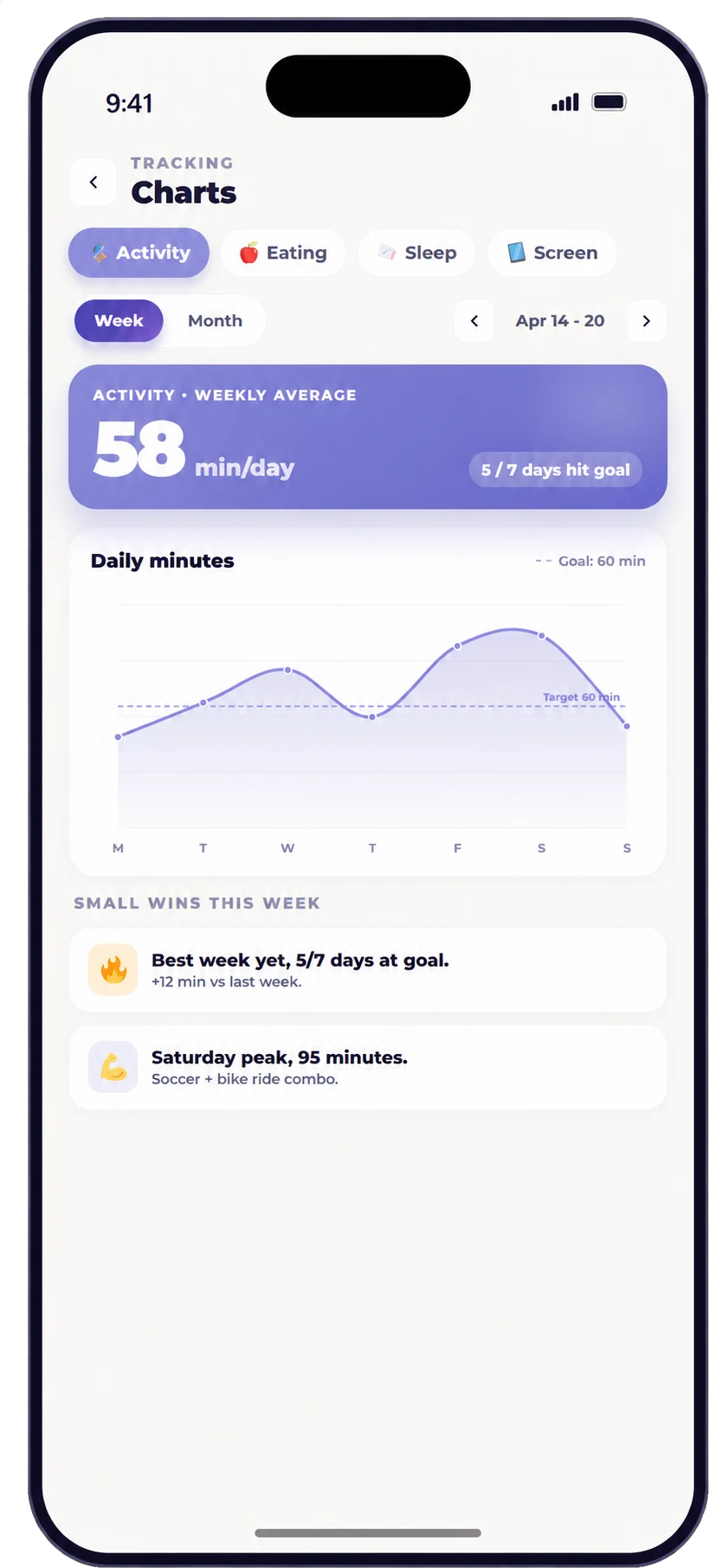
ProudMe is designed around small goals, reflections, and progress views for healthy-habit categories. It is not medical care, a diagnostic tool, or proof that a child is healthy.
Frequently asked questions
How many habits should a child track?
Start with one. Add another only when the first tracker feels understandable and low-effort.
Should we preserve a streak?
A streak can be motivating, but it should never turn a missed day into shame. Focus on returning at the next opportunity.
Can a child track sleep?
Track a controllable routine step, such as beginning wind-down or charging a device, rather than whether the child successfully fell asleep.
Is a digital tracker better than paper?
No format is automatically better. Choose the one the child understands, the family can protect, and everyone will use without pressure.
Sources and further reading
Start with one small habit in ProudMe
Choose one manageable action, notice the attempt, and keep the conversation going. ProudMe supports healthy-habit reflection; it does not provide medical care or guarantee behavior change.